
Case Study: A $7.25 Million Medical Office Sale-Leaseback in Concord, NC
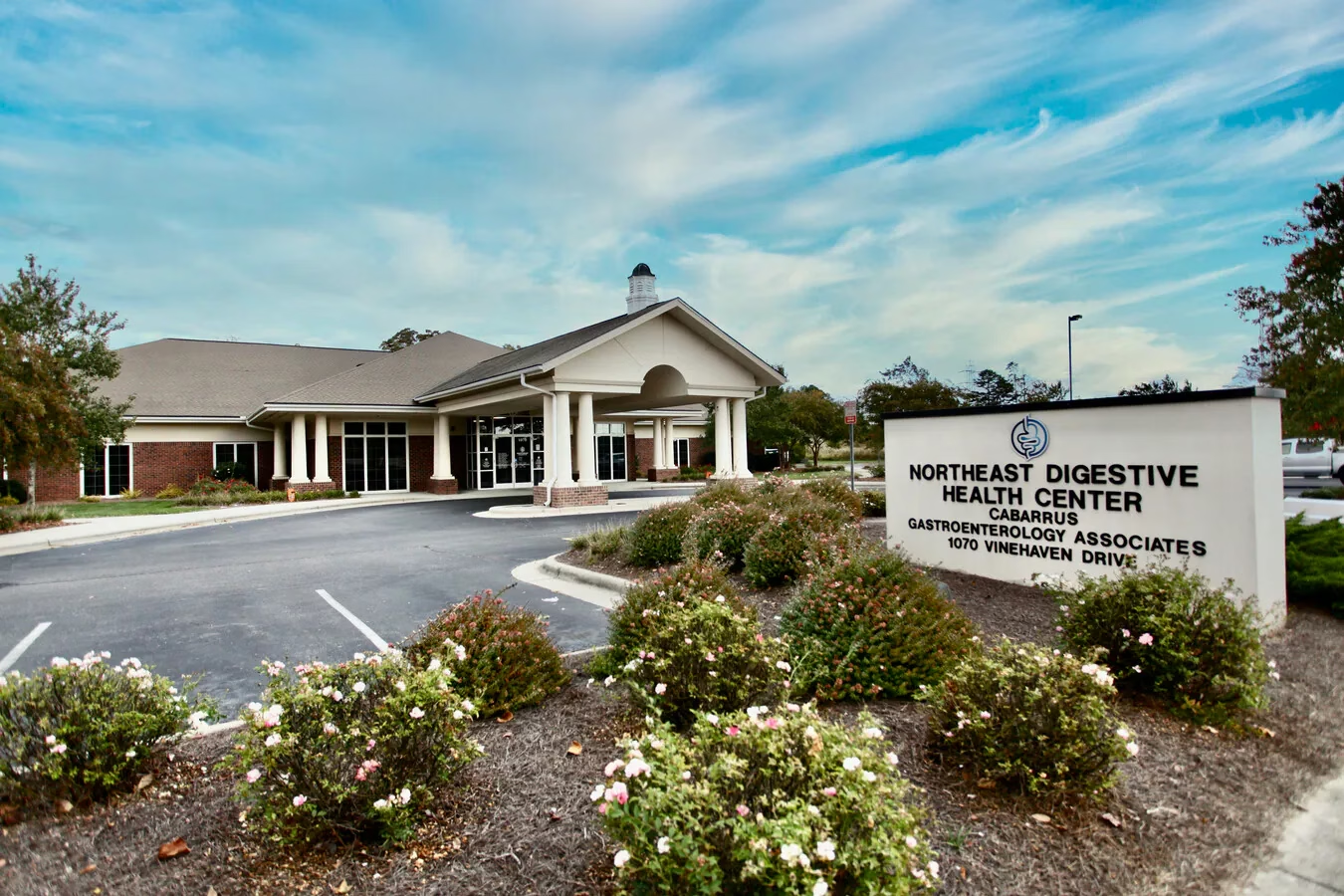
Several of the physicians who owned Northeast Digestive Health Center’s building in Concord were nearing retirement, and they faced a common problem. How do you cash out of the building your practice occupies without uprooting the practice?
The answer was a sale-leaseback. We helped them set up a new 15-year lease between the building and their own practice, then sold the building to an investor. The sale recorded at $7.25 million.
Here’s how the deal came together, and why a sale-leaseback can be one of the best exit tools for business owners who own their real estate.
The situation
Northeast Digestive Health Center, legally Cabarrus Gastroenterology Associates, PLLC, has served Cabarrus County for more than 40 years. The practice has 10 board-certified gastroenterologists and five physician assistants. Its 14,720 SF building at 1070 Vinehaven Drive NE in Concord, just off I-85, serves as its headquarters and an accredited outpatient endoscopy center.
Nine physicians owned the building, and several of them were ready to retire and wanted to get the most value out of their real estate. They had a lot of equity tied up in the property, but the practice had no intention of leaving. Its state-licensed endoscopy suites and established patient base made the building hard to replace.
So the goal was twofold: turn the building into cash at the highest possible price, and keep the practice in place for the long term.
The solution: structure the lease first, then sell
In a sale-leaseback, the owner sells the building and immediately leases it back. The investor is really buying the lease: a stream of rent from a dependable tenant. That means how the lease is structured largely determines the sale price.
Before the building went to market, we worked with the physician-owners and the practice to put a new long-term lease in place:
| Term | Detail |
|---|---|
| Tenant | Cabarrus Gastroenterology Associates, PLLC (Northeast Digestive Health Center) |
| Initial term | 15 years, December 1, 2021, to December 1, 2036 |
| Renewal options | Three 5-year options, for up to 30 years in total |
| Rent increases | 2.5% a year through the initial term and every option |
| Lease type | Triple net (NNN); landlord responsible for roof, structure and parking lot |
| Building | 14,720 SF, built in 2004 and recently renovated, with 93 parking spaces |
Each term was chosen with both sides in mind:
- The 15-year term gives an investor long, predictable income, which is what net-lease buyers pay a premium for.
- The 2.5% annual increases raise the rent every year, protecting the buyer against inflation.
- The renewal options let the practice decide whether to stay for up to 30 years.
- The NNN structure passes taxes, insurance and most operating costs to the tenant, while the landlord keeps the big-ticket items: roof, structure and parking lot.
Why we signed the lease before listing
The biggest factor in this deal’s success was having the lease drafted and signed before the property went to market. When a seller lists a building and plans to sign the lease later, every term becomes a negotiation with each buyer: rent, length, increases and who handles repairs. That invites re-trading and slows the process.
Here, the lease was already signed when we listed, and we timed its 15-year term to start on the listing date. Buyers saw a full 15 years of term from day one, knew exactly what they were buying, and could focus on price.
The result: $7.25 million, above asking
We marketed the property at $7,226,181, a 5.5% cap rate on first-year rent. It sold to Montecito Medical, a Nashville-based investor and one of the country’s largest private owners of medical real estate. Montecito announced the purchase in April 2022.
The sale recorded at $7.25 million, above the asking price. That works out to about a 5.48% cap rate on first-year rent. A cap rate is the first year’s rent divided by the price, so a lower cap rate means the buyer paid more for each dollar of rent.
The market responded well. We received multiple offers, with one clear winner. The buyer had a 30-day inspection period, and the sale closed 30 days after that ended, about two months from contract to closing.
The outcome met both goals:
- The retiring physicians turned their real estate into cash at a premium price, without waiting years to sell a building their own practice occupied.
- The practice stays in its headquarters under a lease it helped design, with the right to remain until 2051 if it exercises every option.
- The buyer got a long-term, growing income stream from an established medical group with deep roots in the community.
Why a sale-leaseback works for business owners
Many owner-occupiers, whether medical practices, family businesses or manufacturers, have more wealth tied up in their building than they realize. A sale-leaseback lets them use it without giving up the location.
- Unlock all of your equity. A loan lets you borrow against only part of the building’s value. A sale turns the full market value into cash.
- Stay where you are. The business keeps operating in the same space, with no moving costs and no disruption for customers, patients or staff. Renewal options keep the decision to stay in your hands.
- Make retirement and partner transitions easier. Retiring owners can cash out of the real estate on their own timeline. Remaining partners don’t have to buy them out, and new partners don’t have to buy into a building to join.
- Sell at a premium. Investors pay more for a building with a new long-term lease than for a vacant one or one with only a few years left. Because you’re both landlord and tenant when the lease is signed, you can set terms that investors value.
- Put the cash to work. Proceeds can fund equipment, expansion, new locations or retirement, instead of sitting in bricks and mortar.
- Hand off the big repairs. Depending on the lease, major items like the roof, structure and parking lot become the new owner’s responsibility, as they did here.
- Deduct the rent. Rent paid under the lease is generally a deductible business expense. Talk with your CPA about how it compares with your current ownership costs.
What to weigh before you sell
A sale-leaseback isn’t right for every owner. Before you commit, think through these trade-offs:
- You give up future appreciation. Any rise in the building’s value after the sale goes to the new owner.
- You take on a long-term rent obligation. A 15-year lease is a real commitment, so make sure the business can carry the rent through slower years.
- The sale has tax consequences. Selling can trigger capital gains and depreciation recapture. Some owners defer taxes with a 1031 exchange into other investment property. Plan with your CPA before you sign anything.
- You’ll have less control over the property. Major changes to the building may need landlord approval, and the new owner decides if and when to sell.
- The rent has to be right. Set it too high and the business carries a cost it doesn’t need. Set it too low and you leave money on the table at sale. Getting this balance right is where experienced guidance pays off.
Is a sale-leaseback right for you?
It’s worth a conversation if you:
- Own the building your business occupies and plan to stay at least 10 more years
- Have partners nearing retirement or an ownership change on the horizon
- Want to fund growth without taking on more debt
- Run a medical, dental or specialty practice, or another established business that investors would see as a dependable tenant
Talk to us
New Branch Real Estate Advisors structured and sold this sale-leaseback, and we help owners across Concord, Cabarrus County and the Charlotte region do the same. If you own your building and want to know what it could be worth with a new lease in place, contact us for a confidential review.
Contact Ryan Kinney at 704-778-6100 or RyanK@newbranchre.com.